
Series: The Next Generation of Green. Florida's Guide to Intelligent Irrigation Reliability.
Every week, HOA board members and landscape professionals across Florida wake up to the same nightmare: another irrigation failure, another angry phone call from residents, another emergency repair bill.
For communities saddled with underperforming irrigation systems, this isn't an occasional inconvenience - it's a relentless cycle of crisis management that drains budgets, damages landscapes, and erodes resident satisfaction. In Part 1 of this 4-part series, we look at the problem and offer up a solution.

The financial toll is staggering. The real question isn't whether your community can afford to upgrade its irrigation system. It's whether you can afford not to.
Walk through any Florida residential community, and you'll likely find manicured lawns, pristine flower beds, and carefully maintained landscapes. What you won't see is the infrastructure struggling beneath the surface - aging pump stations operating at the edge of failure, overtaxed components wearing down, and control systems providing little to no visibility into what's actually happening with your water delivery.
These systems often share a common origin story: they were installed by developers who prioritized initial cost over long-term performance, or who simply didn't understand the unique demands of Florida's climate and water sources. The result is irrigation infrastructure that was never optimized for the communities it serves.

"It's no fun if, post-turnover, you end up being responsible for the day-to-day running of these underbaked and inadequate irrigation pump stations," explains a board member from Riverstone, a Naples community that spent years trapped in what they call the "break/fix" cycle.
The numbers tell a sobering story. At Valencia Lakes in Wimauma, a community of 1,647 homes was operating a massive triple-sled submersible system with nine pumps - a setup described by the property owners association as "massive, extensive, crazy, and costly to keep up." Not only did the sled system itself present potential drain on budget, if pumps were to fail, replacement costs can vary widely. For example, some running around the $10,000 mark, and others exceeding $20,000 per unit depending on the equipment. But that figure only tells part of the story.
For submersible systems like Valencia Lakes once operated, maintenance costs compound rapidly. The complexity of servicing underwater equipment means communities face not just the cost of replacement parts, but the specialized labor required to access them. Extraction costs alone can run into five figures before any actual repair work begins, and when you add pump and motor replacement on top of that, a single failure can devastate a quarterly maintenance budget.
But direct repair costs are only the beginning. The cascading effects of unreliable irrigation create a financial ripple that touches every aspect of landscape management.
At Bellaggio, a 560-acre active adult community in Lake Worth, an inadequate irrigation system was forcing the HOA to replace sod year after year. The irrigation mainline broke repeatedly, leaving sections of the community without adequate water. The result? An annual sod replacement bill of $40,000.
Forty thousand dollars. Every single year. Just to replace grass that should never have died in the first place.
This pattern repeats across Florida. Irrigation failures don't just kill grass - they damage ornamental plants, stress mature trees, and destroy carefully cultivated landscapes that represent years of investment. Communities find themselves not just maintaining their greenspace, but constantly rebuilding it.
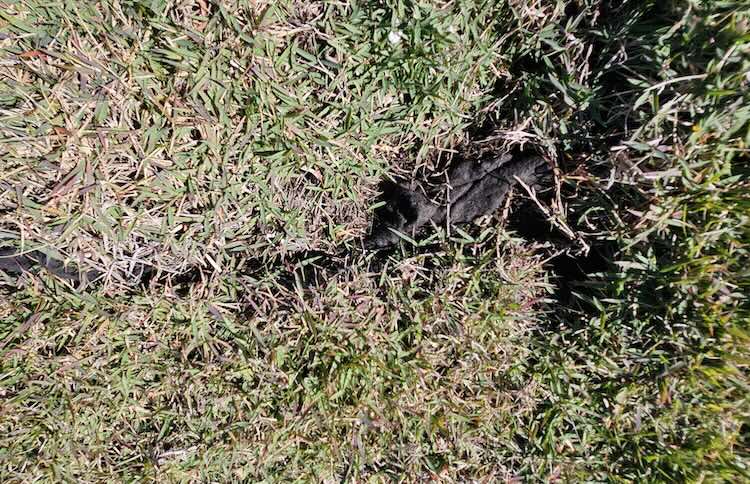
The math is brutal. Bellaggio's $40,000 annual sod replacement cost alone would fund a significant system upgrade in just a few years. Instead, that money was simply disappearing into the ground - year after year, with no end in sight.
Financial costs are only half the equation. The operational burden of managing failing irrigation infrastructure can consume entire committees and overwhelm property management teams.
Riverstone's experience illustrates this perfectly. With 802 single-family homes and 300 acres of manicured greenspace, the Naples community was fielding 50 to 100 irrigation-related complaints every week. Every. Single. Week.
Think about what that means for the landscaping committee, property managers, and board members trying to maintain community harmony while juggling countless other responsibilities. Each complaint requires response, investigation, explanation, and follow-up. Multiply that by 75 complaints per week, and you're looking at a full-time job just managing resident dissatisfaction.
"For over a decade, the development's completely inadequate irrigation was a costly burden on the community," the Riverstone case summary notes. The toll on volunteer board members and staff morale is impossible to quantify but painfully real.
Modern Florida irrigation doesn't just move water from point A to point B. Many communities rely on complex, interconnected water sources that require sophisticated management. Lined lakes that depend entirely on replenishment. Reclaimed water systems. Wells. Emergency transfer capabilities from clubhouse lakes or other backup sources.
Valencia Lakes faced exactly this challenge. Their primary water source was a lined lake that was 100% dependent on replenishment since it couldn't passively draw groundwater. Replenishment relied on reclaimed water, a secondary well, and a transfer from a clubhouse lake as a last resort. Managing this complexity with outdated pump stations and inadequate controls was nearly impossible.
Without proper automation and visibility, communities find themselves:
This lack of control doesn't just create operational headaches - it introduces risk. When you can't monitor your system in real-time, small problems metastasize into major failures.
Modern irrigation management systems like Hoover Flowguard provide over 150 automated alerts for critical issues. These warnings aren't just conveniences - they're early detection systems that can prevent catastrophic failures.

Consider what happens when these warnings aren't available:
Rapid Cycling: Without monitoring, rapid cycling - when pumps repeatedly turn on and off in quick succession - can go undetected until it causes premature failure of mainline pipes, motors, and components. By the time you notice the symptoms, the damage is done.
High Differential Pressure: This indicates clogged filters restricting water supply, but without real-time monitoring, communities only discover the problem when their landscapes start showing stress or sprinklers fail to operate properly.
Power Failures and Voltage Events: Communities without alert systems often don't know their irrigation is down until residents start calling about brown lawns. In Florida's climate, that delay can mean the difference between stressed turf and dead turf.
Abnormal Water Usage: Mainline breaks can waste thousands of gallons before anyone notices. In one documented case, Flowguard data recorded usage of over 38 million gallons in a single month - the kind of granular tracking that makes it possible to identify problems before they become disasters.
These aren't hypothetical scenarios. They're daily realities for communities operating legacy systems without modern monitoring capabilities.
Perhaps the most insidious aspect of legacy irrigation systems is that inaction itself carries a cost. Every month that passes without upgrading your infrastructure is another month of:
Riverstone learned this lesson the hard way. Even after recognizing their irrigation was inadequate, hesitation and contradictory advice led to a botched replacement attempt that cost them a six-figure sum. "They installed another half-baked pump station that was nearly as bad as the equipment it was replacing, and it burnt out multiple times in the first year," a board member recounted.
The temporary savings from delaying a proper solution evaporated in spectacular fashion, leaving the community worse off than before.
The challenge many communities face isn't just technical - it's knowing who to trust. HOA boards are typically composed of volunteers with professional expertise in other fields. They're making high-stakes decisions about complex infrastructure while being pulled in multiple directions by contractors offering contradictory advice.
"It's incredibly difficult to make decisions about something as expensive, important and complex as a community irrigation system," Hoover's analysis of the Riverstone project acknowledges. "There's a definite learning curve to these things."
This is where the choice of irrigation partner becomes critical. Communities need more than equipment suppliers - they need advisors who will:
The difference between a vendor and a partner shows up in the first conversation. Are they asking questions about your water sources, your landscape priorities, your operational constraints? Or are they presenting a one-size-fits-all solution?
The good news? Communities don't have to resign themselves to irrigation chaos. The transformation is possible, and the results are dramatic.

After Riverstone's properly designed Hoover system was installed, resident complaints plummeted 90% - from 50-100 per week to approximately 5. The HOA began saving hundreds of thousands of dollars in maintenance costs. The landscapes that had suffered for years were finally receiving consistent, reliable irrigation.
Bellaggio's consolidation from 24 problematic pump systems to 10 properly designed Hoover stations eliminated their $40,000 annual sod replacement expense entirely. The mainline breaks that had plagued them for years simply stopped happening.
Valencia Lakes achieved uninterrupted water supply after years of constant interruptions, eliminating the high repair costs that had become a routine budget item.

These aren't incremental improvements. They're complete transformations from operational crisis to operational confidence.
If your community is trapped in the maintenance crisis cycle, the first step is honest assessment. How much are you really spending on irrigation-related costs? Not just pump repairs, but sod replacement, overtime for emergency service calls, water waste, and the opportunity cost of board and staff time consumed by constant firefighting.

Then ask a harder question: What would reliable, intelligent irrigation make possible for your community? Lower HOA fees? Better amenities? More time focused on enhancing resident experience instead of managing crises?
The communities that have made the transition from legacy systems to modern, intelligently designed irrigation infrastructure have discovered something remarkable: when your irrigation just works, it frees everyone to focus on what actually matters - creating and maintaining the beautiful, thriving landscapes that make Florida communities special.
The question isn't whether you can afford to upgrade. It's whether you can afford another year of the status quo.


800.548.1548
2801 N Powerline Road Pompano Beach, FL 33069


© 2026 Hoover Pumping Systems Corporation. All rights reserved.