
In our first article, we explored the financial and operational toll that legacy irrigation systems take on HOA boards, property managers, and landscape professionals across Florida. We looked at the spiraling repair bills, the landscape degradation, the endless complaint cycles, and the fundamental lack of control that makes managing a failing system so exhausting.
This article looks at the other side of that equation: what genuine control actually looks like, and how modern irrigation pump system management technology transforms the way communities operate - shifting them from a posture of constant reaction to one of proactive oversight.
The shift starts with visibility. And visibility starts with Flowguard.
Most legacy irrigation systems have one thing in common: they offer almost no useful data. At best, you know when the pumps are scheduled to run, and you find out when something has gone wrong; and that’s usually because a resident called to complain about a dead patch of lawn, or an emergency contractor turned up with a bill. Everything in between is guesswork.
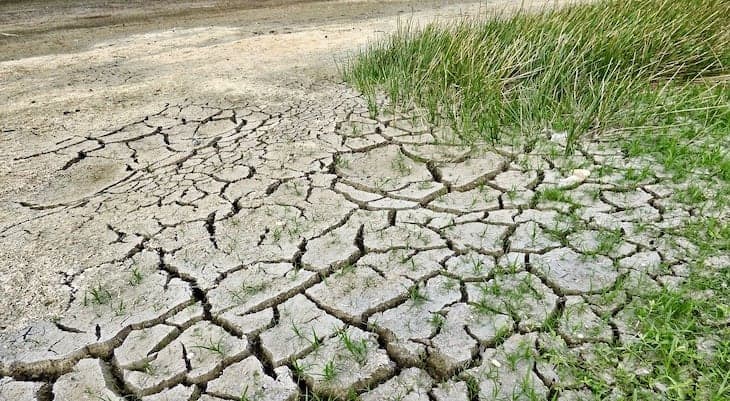
That information vacuum has real consequences. Small problems - a slightly elevated pressure reading here, a pump cycling a little too frequently there - are invisible until they become expensive. A clogged filter goes undetected until restricted flow compromises distribution across the field - reducing the coverage your landscape depends on. A mainline with a minor leak quietly wastes thousands of gallons before anyone notices the spike in the water budget, or exclusions. A pump exhibiting the early signs of motor failure keeps running until it fails completely - taking the surrounding infrastructure with it.
This is not bad luck. It is the predictable outcome of operating without adequate monitoring. The good news is that it is entirely preventable.
Hoover Flowguard is the unique SCADA (Supervisory Control and Data Acquisition) software that sits at the heart of every Hoover pump station. It has been in development and active deployment since 2003, and is now in its third generation - refined over two decades of real-world use on residential communities, golf courses, sports complexes, resorts, and large master-planned developments across Florida.

At its core, Flowguard does something deceptively simple: it gives you complete, continuous visibility of your irrigation system. Flow rates, operating pressure, source levels, water salinity, pump performance, water usage against budget - all of it, updated in real time, accessible from any phone, tablet, or laptop with an internet connection.
But Flowguard is more than a dashboard. Its embedded intelligence capabilities mean it is not just recording what is happening - it is actively interpreting that data and alerting you when something demands attention.
Flowguard monitors your system around the clock and generates over 150 different automated alerts when unusual behavior or potential problems are detected. Two of the most critical are worth understanding in detail, because they represent exactly the kind of early warning that prevents expensive failures.
Rapid Cycle Warning. Rapid cycling occurs when a pump repeatedly turns on and off in quick succession, typically as it attempts to repressurize the mainline following a pressure drop - most often the sign of an undetected leak somewhere in the system. Left undetected, this behavior accelerates wear on pump motors, components, and mainline pipes - leading to premature failure across multiple parts of the system simultaneously. Flowguard flags the pattern early, allowing the root cause to be identified and addressed before the damage compounds.
High Differential Pressure Warning. This alert indicates that pressure differential across your filtration system has climbed above expected thresholds - a reliable sign that filters are becoming clogged, and water supply is being restricted. In communities drawing from reclaimed water or lined irrigation lakes with variable water quality, filter blockages can be a common and recurring challenge - especially without the right filtration. Catching them early is the difference between a straightforward maintenance visit and a landscape-wide irrigation failure.

Other alerts cover power failures, abnormal water usage, low source levels, rain sensor activation and restart events, and much more. Taken together, they add up to a system that is genuinely watching your infrastructure for you - so you don't have to.
Understanding what Flowguard monitors is one thing. Seeing what it makes possible in practice is another.
Wellen Park, a master-planned community in Sarasota County, is currently the fourth-fastest-growing residential community in the United States. Projected to house more than 60,000 residents across an 11,000-acre site, it operates under a current water use allocation of approximately 9 million gallons per day - a figure monitored and enforced by the South Florida Water Management District (SFWMD).
Managing water at that scale is genuinely complex. Man-made irrigation lakes must be monitored and replenished as water levels change. Individual Flowguard systems - Hoover has installed over 45 across the development, with more being added as the community grows - need to be tracked for flow rates, pump conditions, and performance. And the water itself needs to be checked: salinity levels matter, because salt water introduced into irrigation systems can cause serious damage to vegetation.

Flowguard is central to how the West Villages Improvement District (WVID) manages all of it. The operations team uses real-time dashboards to track activity across the entire development. Automated alerts notify them immediately if something changes - if a pump station shows unusual behavior, if water usage spikes beyond expected parameters, or if source levels at an irrigation lake are dropping.
Hoover thinks ahead and helps us find solutions to problems that inevitably crop up when you're managing a large acreage. They fly by our wingtips. - Mike Smith, Operations Manager, West Villages Improvement District
The system can also respond automatically. If a mainline were to sever overnight, Flowguard can shut down the relevant pump station without anyone needing to be on-site, preventing what can amount to tens of thousands of gallons of water loss within minutes - and the catastrophic consequences that can follow.
And because Flowguard scales seamlessly, the same system that manages a single pump station on a small residential development is managing over 45 Flowguard systems across an 11,000-acre site. The software grows with the project. You can read more about this improvement district water management project in our case study.
Insight Irrigation is a trusted irrigation consulting and contracting company based in central Florida, responsible for the design and management of irrigation systems on some of the state's most prestigious master-planned communities. Managing multiple properties, often spread across significant distances, creates a data challenge that most irrigation software simply cannot meet.
With Flowguard, every property Insight manages is accessible from a single, centralized dashboard - with all the granular detail their water managers need to stay ahead of problems. Flow rates, pressure performance, water usage, pump cycle data - it is all there, all the time, without requiring a site visit to access it.

At Sonoma Isles, a residential development covering 87.3 acres in South Florida, the SFWMD had allocated a water use budget of 77.1 million gallons per year. When Insight took over management of the site, usage was already at 66 million gallons and climbing - with more properties still under construction. By implementing Flowguard and applying best-practice irrigation management, they brought annual usage down to 54 million gallons while simultaneously improving the health and appearance of the landscape.
It's our customers who foot the bill when something goes wrong with their irrigation. With Flowguard, we have the power to safeguard their investment. In short, we can't be as successful as we are without Flowguard. - Aaron Smith, Owner, Insight Irrigation LLC
That is not a modest efficiency gain. It is a fundamental change in how the system is understood and operated - made possible by access to the kind of granular, reliable data that Flowguard provides.
PGA National Communities in Palm Beach Gardens is a 2,430-acre master-planned community with 43 neighbourhoods and approximately 5,700 homes. When the Property Owners Association inherited management of the development from its original developer, they also inherited six pump stations that their own management company described as being held together with band-aids. For years, the team had been running emergency wet checks, tracking down electrical faults, and managing the fallout from burst mains and flooded roadways.
After the decision was finally made to replace the aging infrastructure, Hoover designed and installed six new pump stations and completed a comprehensive cable-mapping and replacement program across the entire site. Flowguard was integrated from the outset, providing the ongoing monitoring and remote management capabilities that a community of that scale demands.

Maintenance and repair bills fell sharply after the transition. The landscaping budget came under significantly less pressure. And for the first time, the board and management team had genuine confidence in their irrigation system - backed by data, and supported by a partner actively monitoring performance on their behalf.
Flowguard is most effective when it is paired with infrastructure that has been properly engineered for the demands of the specific community it serves. This is a point worth dwelling on, because smart software applied to a fundamentally flawed physical system can only do so much.
At Paseo, a residential community in Fort Myers, the existing pump station was upsized by 50% to improve water distribution and better serve the development. The original 8-inch pipeline was marginal for the system's initial capacity, but when the enhanced system demanded more, that pipeline became a bottleneck - not because of a design error at the time of installation, but because the infrastructure could not scale with the upgrade. Identifying that constraint and engineering around it was a prerequisite for the rest of the system to perform.

This is a pattern that repeats across Florida. Communities with multiple interconnected water sources - reclaimed water feeds, wells, transfer lines from backup lakes, wastewater treatment outputs - face genuine complexity in managing their infrastructure day to day. Getting the physical engineering right, and then overlaying intelligent management software on top of it, is how communities achieve reliable, long-term performance rather than just better-managed chaos.
Hoover’s answer to this challenge starts with Flowguard - delivering complete monitoring and control at the pump station level. For communities that require management all the way down to the zone level, that is where our Intelligent Remote Irrigation Management Solution (HIRIMS) comes in, bringing together the Hoover irrigation clock, pump station infrastructure, and Flowguard’s management software into a single, fully supported platform.
Every irrigation cycle effectively becomes its own automated wet check, with zone-level performance verified against expected flow rates and any deviation flagged immediately.
Practical benefits include the ability to generate data remotely for regulatory purposes - eliminating the cost of manual site visits for reporting, which for some communities can save in the region of $300 per month. Field repairs can be validated remotely: after a technician fixes a broken head or a faulty valve, the system confirms whether the repair has been successful without requiring a return visit. And when something does need attention in the field, Flowguard's mapping tools mean that effort can be focused precisely where it is needed.
The result? An irrigation operation that is genuinely under control - not just on the day it is installed, but over the life of the system.
For HOA boards and property managers, the practical impact of transitioning to a properly engineered, intelligently managed irrigation system is difficult to overstate. The complaints stop accumulating. The emergency call-outs become rare rather than routine. The water bills reflect actual usage rather than undetected waste. And the reporting that regulators and management districts require - data that used to demand manual site visits and significant staff time - is generated automatically.

For landscape professionals and irrigation contractors, the value of Flowguard is equally direct. Managing multiple properties from a single dashboard, with granular per-pump and per-zone data available at any time, from any location, changes what is operationally possible. Problems can be diagnosed remotely. Clients can be served more efficiently. And the kind of proactive management that protects landscapes and extends the lifespan of infrastructure becomes achievable without proportionally scaling up site visits.
When we don’t have Hoover tools, we can’t do our job as effectively. Aaron Smith, Owner, Insight Irrigation LLC

800.548.1548
2801 N Powerline Road Pompano Beach, FL 33069


© 2026 Hoover Pumping Systems Corporation. All rights reserved.