
This month’s H2O Zone is very much a ‘good news bad news’ mix of articles from around the world - and from Florida itself. Stories that highlight, once again, the importance of both focusing in on the little things, and looking at the bigger picture.
The bad news includes a study on climate risk across the United States which places Florida at the top of the ‘at risk’ list of States and identifies cities such as Cape Coral, West Palm Beach and North Port as being subject to the ‘chronic physical threat’ of long term changes such as heat, drought and rising sea levels. At the time of writing, Floridians still wait to see if Governor De Santis is going to sign-off on $11 billion dollars’ worth of environmental protection projects, and at the same time, an article by the Environmental and Energy Study Institute highlights the fact that water levels are dropping in lakes across the United States in a way which impacts disproportionately on poorer communities.
It’s not all doom and gloom, however. A survey finds that Floridians across the board recognize the human-made impact of climate change and support measures to deal with it, which start with a $100 million project to protect the Florida Wildlife Corridor. At the same time we have Florida kids promoting water conservation, Florida farmers winning prizes for work around sustainability and Florida property developers helping scientists to create ‘drought proof landscaping’ for residential developments. Zooming out a little we’ve found big businesses striving to cut the amount of water they use, recognition that water conservation could play a role in helping to cut carbon emissions.
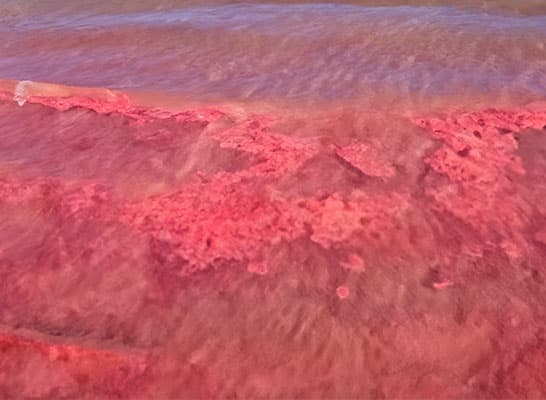
Floridians are still waiting to find out whether Governor Ron De Santis is going to sign-off on $11 billion dollars’ worth of environmental projects. The projects for which specific sums of money have been earmarked include water quality improvements in the Caloosahatchee Watershed, Everglades restoration and steps to deal with the threat of red tide. Red tide is the name given to a higher-than-normal concentration of microscopic algae called Karenia brevis in sea water. The algae produces powerful neurotoxins which can harm humans and kill marine animals.
In news which could help to restore your faith in the next generation’s ability to deal with the issue of water conservation, the Bonita Springs Utilities Inc. announced the winners of its 2023 ‘Drop Savers’ water conservation poster contest. The winners were chosen for the creativity and originality of the artwork and the message conveyed. The posters illustrated a range of everyday water conservation measures such as turning off the faucet when brushing your teeth, only using the dishwasher when it’s full and taking showers instead of baths, showing that kids as young as 6 or 7 have a firm grasp of the steps we could all take to make a difference.
Another story illustrating the difference that individuals can make when it comes to environmental sustainability featured seven north Florida farm families being honored for their work around sustainability at the 22nd Annual Suwannee CARES Celebration at the UF/IFAS North Florida Research and Education Center- Suwannee Valley. CARES is the County Alliance for Responsible Environmental Stewardship, and the awards handed out recognized superior natural resource conservation practices such as best management practices which save 1.5 million gallons of water per crop season.
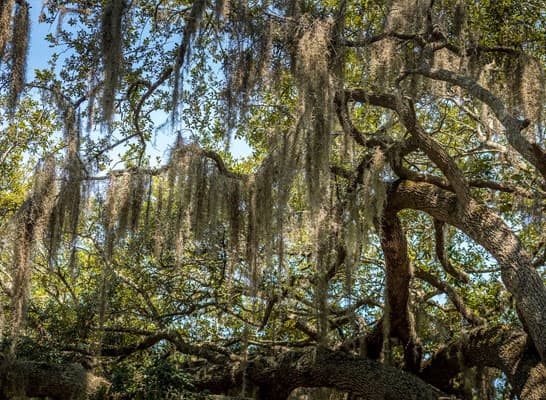
One project for which funding has been signed off on is the protection of almost 40,000 acres within the Florida Wildlife Corridor at a cost of nearly $100 million. The action being taken will include plans to clean up and conserve Horse Creek, a tributary of the Peace River which, itself, provides drinking water for more than a million people.
This story helps to illustrate how water conservation is an issue which needs to be approached from two directions. The first is the protection and preservation of water resources themselves but the second – as detailed in this piece and in a recent Hoover blog (link to the second Florida Climate blog) – is the creation of urban landscaping which is ‘drought proof’ in nature. The article looks in-depth at a Central Florida project in which the University of Florida Institute of Food and Agricultural Sciences (UF/IFAS) teamed up with land developers to create residential landscaping solutions which tick the ‘drought proof’ box.
A recently published survey of attitudes toward climate change, based on a poll carried out by Florida Atlantic University’s Center for Environmental Studies, shows that 90% of Florida residents believe climate change is happening, with 65% of respondents attributing it to human actions. A majority 61% of Floridians are moderately to extremely worried about an increased number of flood event due to climate change. When it comes to hurricanes, the same figure reaches 68%.
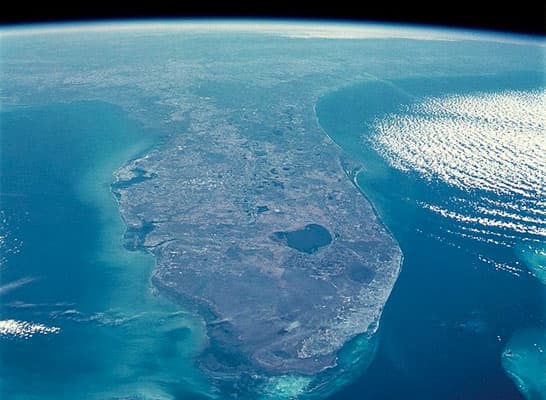
A nationwide study on climate risks in the United States, carried out by First Street and Moody’s Analytics, placed Florida at the top of a list of states most likely to be facing physical risks as a result of climate change, with its 8,346 miles of shoreline and low elevation placing it at risk of climate-driven events such as hurricanes, floods and rising sea-levels. South Florida is also singled out as being the place in the US that is likely to see the biggest increase in the number of days with record-breaking or extremely high temperature levels.
An article which highlights the issue of low water levels in lakes across the United Sates caused by long term drought conditions, and the impact these water shortages have on a range of communities. On a more optimistic note the article points out that work toward water conservation, rather than being seen as an alternative to work on cutting carbon emissions (and thus helping to deal with climate change as a whole), could in fact play a key role in helping to bring carbon emissions lower.
As pointed out in the UNESCO Global Report of Water Development 2023, water is something on which we all depend, and effective action on water conservation requires a collaborative approach. This article looks at how corporations such as Levi Strauss and H and M are partnering with organizations like the World Wildlife Fund and the World Resource Institute to develop modes of production and working which reduce the amount of water their products require to make the journey through production and on to retail.
This article sets out the way in which reducing carbon emissions – with governments and businesses clamoring to sign up to Net Zero pledges – has tended to overshadow the vital role that water could play in fighting climate change. In simple terms – conserving water could cut energy use which would help to reduce greenhouse gas emissions.

800.548.1548
2801 N Powerline Road Pompano Beach, FL 33069


© 2026 Hoover Pumping Systems Corporation. All rights reserved.