
Last Updated: 11 May 2026
Bryozoans are microscopic invertebrate creatures that form algae-like colonies in irrigation lakes and freshwater bodies. When colony fragments break away and enter an irrigation system, they attach to pipes and filters, multiply, and can clog the system to the point of failure. Florida's warm climate makes bryozoan management an ongoing priority - vigilant seasonal monitoring and effective intake filtration are the best defences.
Before looking at the impact that bryozoans can have on an irrigation system it’s worth taking the time to explore exactly what bryozoans are and how they interact with bodies of fresh water like irrigation lakes.
In simple terms, bryozoans are small, invertebrate creatures measuring no more than 0.5 mm (or 0.02 inches) in length. Although an individual bryozoan may be microscopic in size, the issues they cause arise from the fact that they don’t appear in water as individuals but rather as algae-like ‘colonies’.
In appearance, a colony of bryozoans often resembles nothing as much as a growth of moss or similar plant life, which is why they are also referred to as ‘moss animals’. The problems for anyone running an irrigation operation arise, however, when parts of the colony seen in open water break away and are carried into the workings of that system. They attach themselves to the surfaces of various components - pipes and filters etc., which then act as substrates to which the colony can attach - and multiply.
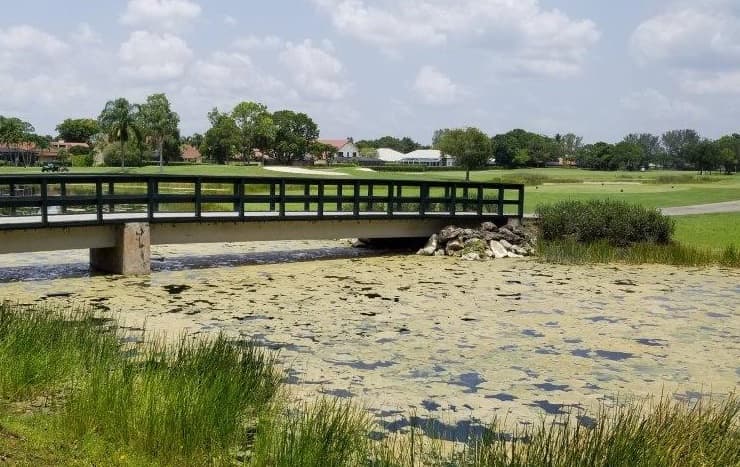
Untreated, bryozoans have the potential to clog parts of an irrigation system to such an extent that the system ceases to function entirely or, at best, is severely compromised in terms of irrigation water delivery. Ironically, since they thrive in nutrient-rich water and because of the way they feed, the presence of bryozoans in an irrigation lake is indicative of a healthy ecosystem. As they feed, the bryozoans filter the water, retaining the nutrients they need - and in doing so, remove both algae and floating sediment. The presence of a continuous flow of nutrient rich water through an irrigation system means that the bryozoans can quickly become well-established and grow to a size and density which is problematic.
The risk of bryozoans appearing in an irrigation lake is something that people delivering or managing irrigation in Florida have to pay particular attention to. This is due to the fact that the geographical area within the United States across which bryozoans are native runs east of the Mississippi river as far north as Ontario and as far south as Florida.
The Florida climate – long hot summers and mild wet winters – creates exactly the kind of conditions in which these creatures thrive, as indeed does the presence across the state of almost 8,000 lakes, 1,700 rivers, streams, springs and spring runs and large areas of wetland! If you have responsibility for an irrigation lake in Florida then monitoring the presence of bryozoans needs to be worked into your wider maintenance and irrigation management plan, and the right steps taken if they are found to be present.
Every month, we publish H₂O Zone - a roundup of the latest irrigation, conservation and water news that’s relevant to our Florida client base. To get H₂O Zone emailed direct to your inbox, sign up here.
The cycle of bryozoans impacting on irrigation systems generally follows the pattern set out below:
One of the more difficult aspects of dealing with bryozoans is the fact that, although the colony itself may appear to shrink during colder parts of the year, it is actually retreating into itself as a form of self-preservation. Rather than being killed off by a cold snap, a bryozoan colony will enter a form of ‘hibernation’ and revive when conditions improve.
The ability of bryozoans to survive in less than ideal environments is also based on these organisms’ ability to expel what are called statoblasts. These are microscopically small clusters of dormant cells contained within the original zooid (the name for an individual bryozoan), which generate a hard shell similar to the exoskeletons seen across the animal kingdom. Once expelled, the statoblasts can attach themselves in the same manner as the bryozoans, but are even more difficult to detect and remove due to their size. This ability enables bryozoans to reproduce and survive in harsh conditions, whether this is due to the weather or attempts to deal with them.
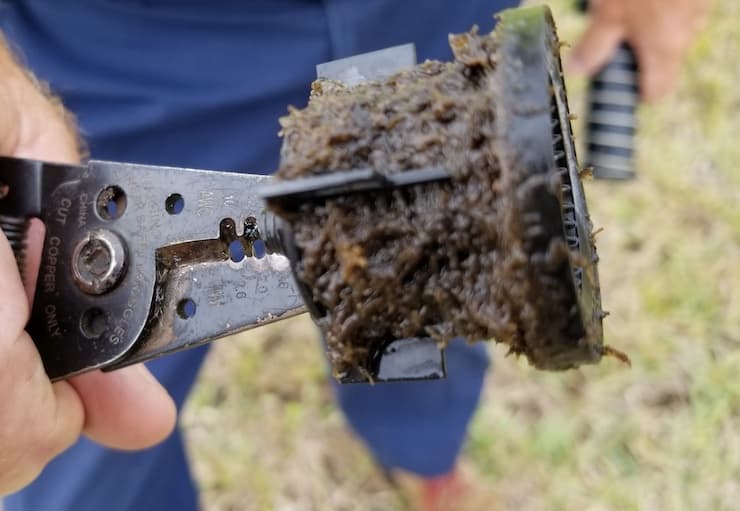
If you find bryozoans in the water of your irrigation lake – or clogging the irrigation system itself – then they can be extremely difficult to eradicate entirely.
The first and simplest course of action is simply to scour and scrub the affected surfaces manually, removing as much of the bryozoan colony present as possible. This is clearly a difficult, time consuming and labor-intensive task, however, and may involve certain parts of the system having to be shut down while cleaning takes place. Another reason why a manual clean is a less than optimal solution is that it is difficult to be certain that all of the bryozoans have been removed, a problem which is even more pronounced when it comes to ensuring all of the even smaller statoblasts have been removed.
Another possible option involves treating the water in question with the chemical sodium hypochlorite, usually known as bleach. This is not an ideal solution, however, as it isn’t EPA-approved for this use and can be dangerous for other organisms within the water which aren’t being targeted as nuisances. Given that the water in an irrigation lake is ultimately intended to maintain the surrounding vegetation many people will hesitate before introducing a chemical such as bleach into the water.
One solution utilized by the owners of an Indiana golf course involved dealing with the problem at source. The bryozoans in question were present in a retention pond used to supply the sprinklers which kept the course irrigated. Over the course of spring and again in autumn the sprinklers used across the course would become clogged with parts of bryozoan colonies separated from the inside of the irrigation lines. Within the retention pond itself the bryozoans could be seen to be growing along the rocks located along the shoreline, with the afore-mentioned statoblasts floating like a scum on the surface of the water. By removing the rubble, the owners of the course removed the substrate on which the bryozoans had been growing and only had to treat the irrigation system with chemicals once to resolve the problem entirely.
| Treatment Method | How it Works | Effectiveness | Drawbacks |
|---|---|---|---|
| Manual Cleaning | Scrubbing affected surfaces to physically remove colony material | Partial - difficult to remove all colony fragments and statoblasts | Labour-intensive; requires system shutdown; near-impossible to achieve complete removal |
| Chemical Treatment | Treating water with sodium hypochlorite (bleach) to kill colonies | Limited as a standalone measure | Not EPA-approved for this use; risks harm to non-target organisms; irrigation water contacts vegetation |
| Substrate Removal + Chemical | Removing the physical surfaces colonies attach to, followed by a single chemical treatment | High - addresses root cause and clears remaining infestation | Requires physical access to shoreline or lake features; more involved upfront effort |
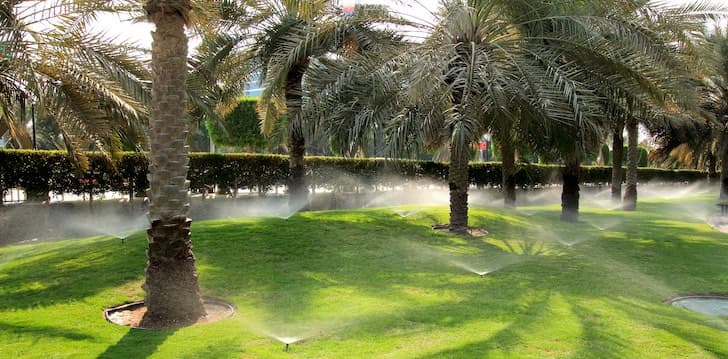
Of course, it won’t always be easy, particularly in larger irrigation lakes, to locate the precise location of any bryozoan colonies, and the ‘solution’ to any issue with bryozoans is always going to come down to maintaining a degree of vigilance which enables you to spot any issues as soon as they become apparent.
In terms of the irrigation equipment itself, the more efficient and effective the filtering on any intake pipes is, the less likely the colonies are to break off and make their way into the pipes themselves, but this places an extra emphasis on checking and cleaning and/or replacing those filters on a regular basis, before the build up of any bryozoans becomes such that the filters cease to function.
What are bryozoans and why are they a problem for irrigation systems?
Bryozoans are microscopic invertebrate creatures - each no more than 0.5 mm in length - that form algae-like colonies in freshwater bodies such as irrigation lakes. They become a problem when parts of a colony break away, enter the irrigation system, and attach to the internal surfaces of pipes and filters. Once established, they multiply rapidly and can clog the system to the point where water delivery is severely reduced or ceases entirely.
How do I know if my irrigation system has bryozoans?
In open water, bryozoan colonies often resemble moss or plant growth on rocks and other surfaces along the shoreline or lake bed. Inside an irrigation system, the first signs are usually reduced water flow and clogged filters or sprinkler heads - caused by colony fragments being drawn into the pipework. Inspecting intake screens, filters, and internal pipe surfaces during seasonal maintenance is the most reliable way to detect a bryozoan problem early.
When are bryozoans most likely to cause problems for irrigation systems?
The highest-risk period is late spring into summer. As water temperatures rise in early spring, bryozoan colonies grow rapidly. When irrigation demand increases and water flow accelerates in summer, colony fragments are pulled from pipe surfaces and carried into filter systems. Florida's warm climate extends this active season significantly, and because colonies enter a form of hibernation in cooler weather rather than dying off, the problem recurs each year.
How do you get rid of bryozoans in an irrigation system?
The most effective approach combines substrate removal with targeted chemical treatment. Removing the physical surfaces - rocks, rubble, or other structures - on which colonies grow eliminates their attachment points, then a single chemical treatment clears the remaining infestation. Manual scrubbing alone is labour-intensive and difficult to complete thoroughly, while chemical treatment with sodium hypochlorite (bleach) on its own is not EPA-approved for this use and risks harming other organisms in the water.
What are statoblasts and why do they make bryozoans harder to control?
Statoblasts are microscopically small clusters of dormant cells expelled by bryozoans as a survival mechanism. Each statoblast develops a hard protective shell and can attach to surfaces just as an adult colony does, but at a size that makes them almost impossible to detect or remove during cleaning. This ability means bryozoan populations can survive harsh conditions - including cold snaps and chemical treatments - and re-establish colonies when conditions improve.
How can I prevent bryozoans from clogging my irrigation filters?
Effective filtration on intake pipes is the first line of defence - the more efficient the filter, the less likely colony fragments are to reach the pipework. However, this means filters must be inspected and cleaned or replaced regularly, before build-up becomes severe enough to compromise performance. Incorporating bryozoan monitoring into a seasonal maintenance plan - particularly in spring and autumn when colonies are most active - is the most practical long-term approach for Florida irrigation operators.
Every month, we publish H₂O Zone - a roundup of the latest irrigation, conservation and water news that’s relevant to our Florida client base. To get H₂O Zone emailed direct to your inbox, sign up here.


800.548.1548
2801 N Powerline Road Pompano Beach, FL 33069


© 2026 Hoover Pumping Systems Corporation. All rights reserved.